Artivona
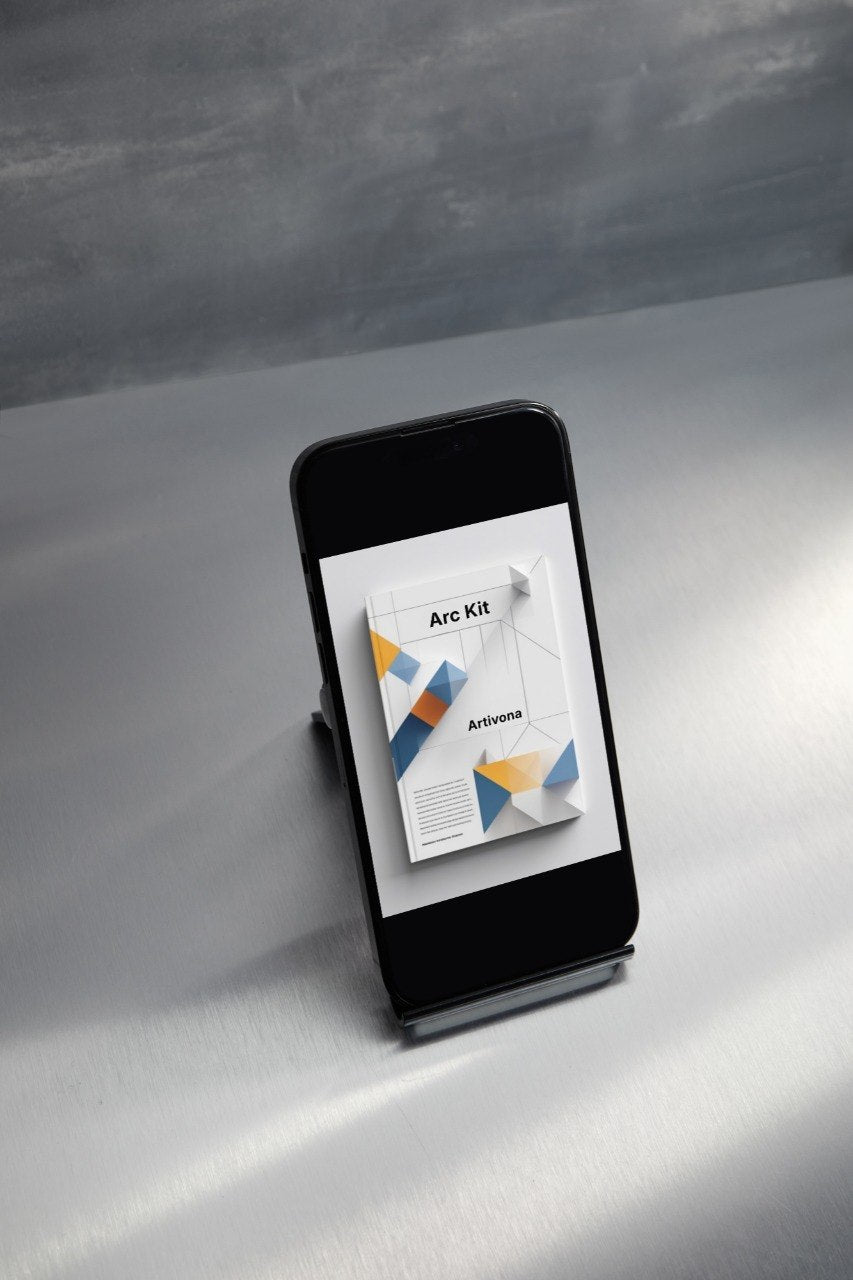
Arc Kit
Arc Kit
Couldn't load pickup availability
Self-paced learning overview
- 📁 Digital file available after purchase
- 🗂️ Long-term availability
- 🔐 Secure checkout
- 📝 Content updated in 2026
1. Problem Statement
Struggling to create your first portfolio piece so it feels like a thoughtful visual fragment rather than a random exercise? You’re not alone: at the beginning, there are often many ideas but not enough structure. One sketch may feel interesting because of its color, another because of its form, and another because of its mood, yet they may not connect into one direction. Because of this, a portfolio can stay unfinished, as if you need many polished works before you can begin. Arc Kit is created to help you move through the first creative arc: from theme to structured presentation.
2. Solution
This course will teach you how to see a first design case as a sequence of decisions, not as a random set of images. In Arc Kit, you will learn how to define a theme, gather visual references without copying, choose a composition logic, and arrange a work so it has a clear structure. The plan avoids loud claims and does not promise external results; it focuses on the learning process, practice, and careful work with form. Each module leads to a small decision: what to show, how to place it, how to explain it, what to keep, and what to remove. By the end, you will have a learning fragment that can later be refined for your own collection of works.
3. What’s Inside
Module 1: Theme as the Start of the Arc
In the first module, you work with choosing a theme for a future case. Instead of the vague goal of “making something beautiful,” the course invites you to create a specific learning task: for example, a visual series for an imagined event, a small creative initiative, an editorial page, or a personal art fragment. You will explore how a theme affects color, form, rhythm, type mood, and overall presentation. The module also helps you define the boundaries of the work so the first case does not grow into an oversized project. Special attention is given to a short description: what you are creating, who the work is intended for in a fictional context, and what mood it should communicate.
Module 2: Visual References Without Copying
The second module focuses on visual direction research. You will learn how to gather references not for imitation, but for analysis: which forms repeat, which colors create the right tone, how space works, and where emphasis appears. The materials explain how to look at examples carefully and ethically, separating observation from direct copying. You will create a short mood map where each element has an explanation. This approach helps you understand why certain visual decisions fit your theme while others add unnecessary noise.
Module 3: Composition Framework
In this module, you move from ideas to building a page or visual field. The course explains how axes, blocks, spacing, repetition, contrast, and focus points work. You will review several layout schemes and see how one theme can shift in mood depending on the composition choice. The task of this module is to create several simple structure options, compare them, and choose the one that supports the idea most clearly. The focus is not on decorating everything at once, but on finding order where form supports meaning.
Module 4: Color and Tone
The fourth module centers on color. You will explore how to choose a small palette, how to separate a main color from supporting colors, and how to avoid visual overload. The materials show how color can support a theme rather than simply make a work brighter. As part of the task, you will create several color options and briefly describe the mood of each one. This helps you make decisions not only through “I like it / I don’t like it,” but through the connection between theme, tone, and composition.
Module 5: Type Behavior
The fifth module looks at text as part of the visual system. You will see how a title, caption, short description, and decorative text can interact with form. The course explains basic hierarchy principles: what should be read first, what supports the main thought, and what can stay secondary. In the task, you will create several type placement options for your theme. The goal is to see text not separately from the image, but as an element of the overall composition.
Module 6: First Finished Learning Fragment
In this module, you bring previous decisions into one learning fragment. You choose the theme, palette, composition, type logic, and arrange the work into a cohesive form. The materials suggest how to review the work: whether there is a main focus, whether elements compete with each other, whether the mood is clear, and whether the decisions can be explained. A short self-review checklist is also included. It helps you notice what already works and what should be clarified before placing the work into a future collection.
Module 7: Case Description for a Portfolio
The final module is dedicated to presentation. You will learn how to write a short case description: theme, task, visual direction, main decisions, and process materials. The course does not teach you to decorate text with loud wording; instead, it shows how to speak about your work in a specific and calm way. You will prepare a small text block that can be placed beside the visual. This helps make the first case clearer for the viewer and more organized for your own collection.
4. Who is this for?
✅ Good fit if you:
- have already explored the basics of portfolio thinking;
- want to create one learning case with a clear structure;
- have ideas but do not know how to choose one and shape it;
- want to work with composition, color, form, and description;
- value calm pacing, practical tasks, and thoughtful presentation;
- want more than a sketch: a visual fragment with an explanation;
- are looking for a starting paid plan without heavy overload.
❌ Not for you if you:
- expect claims about jobs, clients, or financial results;
- want a full large portfolio immediately;
- do not plan to complete practical tasks;
- are looking for training tied to named software;
- expect personal guidance at every step within this plan;
- want a complex long-term program instead of a starting kit.
5. What You’ll Learn
- How to choose a theme for a first design case.
- How to define a short learning task for a portfolio.
- How to gather visual references without copying someone else’s decisions.
- How to analyze form, color, rhythm, and space in examples.
- How to build a composition framework for one work.
- How to choose a palette and explain its connection to the theme.
- How to work with text elements within a visual system.
- How to create a learning fragment with theme, structure, and description.
- How to review your work through simple questions: what is central, what supports the idea, and what distracts.
- How to prepare a short case description for a future collection.
6. Refund Terms
For Arc Kit, a 30-day refund request period may apply according to the Artivona store policy. Before placing an order, the buyer should review the refund terms, material format, and any exceptions listed in the store policy. This plan does not include claims about external results, employment, clients, or financial figures. The materials are created for study, practice, and gradual shaping of a design collection. If the course format does not match expectations, refund requests are reviewed according to the published store rules.
How do refund terms work?
How do refund terms work?
Paid plans may include a 30-day refund request period according to the store policy. For the no-cost plan, a refund does not apply because no payment is made.
Do I need named software or platforms?
Do I need named software or platforms?
No. Artivona materials are not tied to named third-party services, programs, or operating systems. The focus stays on graphic design principles, work structure, idea presentation, and visual thinking.
Does Artivona claim specific career or financial results?
Does Artivona claim specific career or financial results?
No. Artivona courses do not include claims about jobs, clients, financial figures, or instant changes. The materials are intended for study, practice, and shaping a collection of design works.
Share