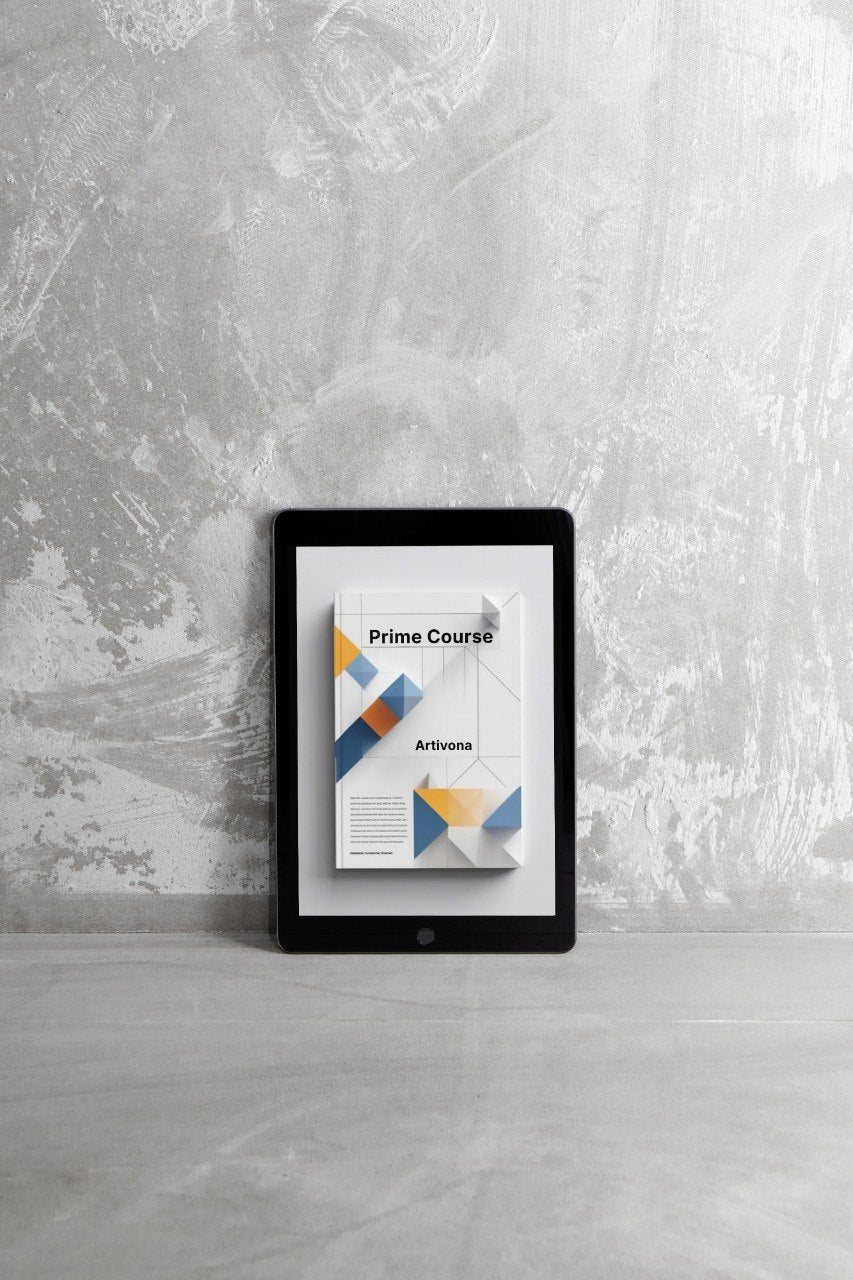
Artivona
Prime Course
Prime Course
Couldn't load pickup availability
Self-paced learning overview
- 📁 Digital file available after purchase
- 🗂️ Long-term availability
- 🔐 Secure checkout
- 📝 Content updated in 2026
1. Problem Statement
Struggling to bring all portfolio parts into one understandable system? At this stage, the challenge is often not one separate work, but how to connect everything together: ideas, sketches, cases, texts, process, details, page order, and overall visual tone. It can be hard to decide which works should stay, which need refinement, how to write an opening, and how to make the collection consistent. Another common question is how to show your learning path without excessive claims or empty wording. Prime Course is created to help move through the full portfolio-building cycle: from first decisions to an organized learning version.
2. Solution
This course will teach you how to work with a portfolio as a cohesive system where every part has a role. You will move from choosing themes and creating first cases to editing, structuring, writing descriptions, and arranging the final learning collection. The plan combines principles of composition, series thinking, grid structure, text presentation, and portfolio logic. The materials do not include claims about work, clients, financial figures, or defined external outcomes. The focus is study, practice, careful editing, and creating a portfolio that can be gradually updated as skills develop.
3. What’s Inside
Module 1: Starting a Portfolio from Zero
The first module helps you understand where to begin if a portfolio does not exist yet or if you only have scattered materials. You will define the learning goal of the collection, possible themes, visual directions, and types of works you want to create. The module explains why a portfolio does not need to begin with a large amount of work: it is enough to choose several thoughtful directions and develop them gradually. You will create an initial portfolio map showing which cases should be prepared, which skills need practice, and which materials already exist. This becomes the base for further course work.
Module 2: Idea, Theme, and Visual Direction
The second module is dedicated to forming themes for cases. You will learn how to separate a broad theme from a specific design task and how to write a short description for a future work. The materials help explore mood, form, color, rhythm, and a possible audience in a learning context. You will create several directions for future works: for example, a poster series, editorial fragment, identity for an imagined initiative, or abstract graphic collection. The goal of the module is to give each case a clear beginning so it does not look like a random exercise.
Module 3: Composition and First Visual Decisions
In the third module, you move into creating first visual decisions. You work with balance, contrast, space, main focus, repetition, and composition grid. The materials show how the same idea can shift through element placement, scale, and rhythm. Practical tasks help create several versions of one case and compare them not by “I like it / I don’t like it,” but through questions: what is read first, what supports the theme, and what creates unnecessary weight. This helps make visual decisions more carefully.
Module 4: Color, Type, and Mood
The fourth module helps gather the visual language of a case. You will explore how a palette supports the theme, how text elements create hierarchy, and how the mood of a work is shaped through the relationship between color, form, and space. The materials explain how not to overload the work with too many colors or text decisions. You will create several palette options, type structures, and short captions. As a result, each case receives not only visual form, but also a clearer tone.
Module 5: Series of Works
The fifth module reviews series creation as an important part of a portfolio. You will learn how to develop one idea into several connected fragments: for example, a set of posters, pages, cards, covers, or graphic compositions. The module explains how to keep a shared system between series parts: repeated rhythm, similar grid, shared palette, text logic, or composition principle. At the same time, you will explore how to make each fragment independent so the series does not look mechanically repeated. The practical part includes creating a series plan and several learning versions.
Module 6: Case Arrangement
In the sixth module, you learn how to arrange a separate work or series as a portfolio case. You create a structure: opening, main visual, short context, process, details, explanation, and closing block. The materials help decide what to show first, how to place process, which details should be enlarged, and which materials are better left outside the page. Special attention is given to avoiding overload and not turning the case into a gallery of all drafts. The goal is to make the presentation clear, organized, and appropriate for a learning portfolio.
Module 7: Portfolio Text
The seventh module is dedicated to the written part. You will learn how to create a portfolio opening, case descriptions, short process captions, and closing notes. The materials help write specifically, without excessive self-praise, loud claims, or complex phrases that do not carry meaning. You will work with text structure: what the task was, which direction was chosen, which decisions were used, and what the process shows. In the practical part, you will prepare text blocks for several cases in one consistent tone.
Module 8: Grid and Shared Presentation System
The eighth module helps bring all cases into one visual frame. You will review grids, spacing, image scale, title style, caption format, block order, and page rhythm. The course explains how different works can feel like part of one portfolio when supported by one shared presentation system. You will create your own arrangement rules: how a case begins, how process is shown, how details are arranged, and how the closing block looks. This helps avoid random differences between pages.
Module 9: Selection and Collection Editing
In the ninth module, you review all created materials and decide what belongs in the current learning version of the portfolio. You will learn how to separate a work that should be included now from one that may be refined later. The materials offer a selection checklist: whether the case has a theme, whether the structure is clear, whether the description supports the visual, whether works repeat too literally, and whether there is rhythm between pages. You also remove unnecessary parts, refine texts, and rearrange cases for a better sequence. This is one of the key stages because a portfolio is shaped not only through creation, but also through careful choice.
Module 10: Final Learning Collection
The final module helps assemble the final learning version of the portfolio within the course. You arrange the opening, cases, descriptions, process, details, and closing notes. The module also suggests creating a future update plan: which themes to explore further, which works need review, and which types of cases can add to the collection. Importantly, the portfolio is not presented as something finished once and forever; it can change together with practice. By the end, you have a structured learning base that can be developed further at your own pace.
4. Who is this for?
✅ Good fit if you:
- want to move through the process of creating a portfolio from zero;
- have separate sketches or works, but no system yet;
- want to create several cases and gather them into one collection;
- want to learn how to work with theme, composition, series, and text;
- want to understand grid, page rhythm, and process presentation more clearly;
- value a learning route with practical tasks;
- want to arrange a portfolio without loud claims or exaggeration;
- are ready to review, shorten, and refine your own materials.
❌ Not for you if you:
- expect claims about work, clients, or financial results;
- want a fully finished collection without your own practice;
- are looking for training tied to named software or platforms;
- do not plan to complete tasks and edit your works;
- expect individual guidance at every step unless it is listed separately;
- want a short introductory material instead of a full learning structure.
5. What You’ll Learn
- How to start a portfolio from zero and define its learning goal.
- How to choose themes for first design cases.
- How to define a task and visual direction without exaggeration.
- How to work with composition, balance, space, and focus.
- How to create a palette, text hierarchy, and mood for a work.
- How to develop one idea into a series of connected fragments.
- How to arrange a separate case with opening, process, and details.
- How to write work descriptions specifically and calmly.
- How to use grid, spacing, and repeating blocks.
- How to connect several cases into one visual system.
- How to select works for the current portfolio version.
- How to edit text, page order, and visual presentation.
- How to create a final learning collection for future updates.
6. Refund Terms
For Prime Course, a 30-day refund request period may apply according to the Artivona store policy. Before placing an order, the buyer should review the refund policy, material description, learning format, and course usage terms. The plan does not include claims about employment, clients, financial figures, or defined external outcomes. The materials are intended for study, practice, case creation, editing, and portfolio formation. If the course format does not match expectations, requests are reviewed according to the rules published in the store.
How do refund terms work?
How do refund terms work?
Paid plans may include a 30-day refund request period according to the store policy. For the no-cost plan, a refund does not apply because no payment is made.
Do I need named software or platforms?
Do I need named software or platforms?
No. Artivona materials are not tied to named third-party services, programs, or operating systems. The focus stays on graphic design principles, work structure, idea presentation, and visual thinking.
Does Artivona claim specific career or financial results?
Does Artivona claim specific career or financial results?
No. Artivona courses do not include claims about jobs, clients, financial figures, or instant changes. The materials are intended for study, practice, and shaping a collection of design works.
Share